The Bay
A sheltered Atlantic estuary with strong tidal exchange — the reason our oysters taste the way they do.
Where the oysters grow
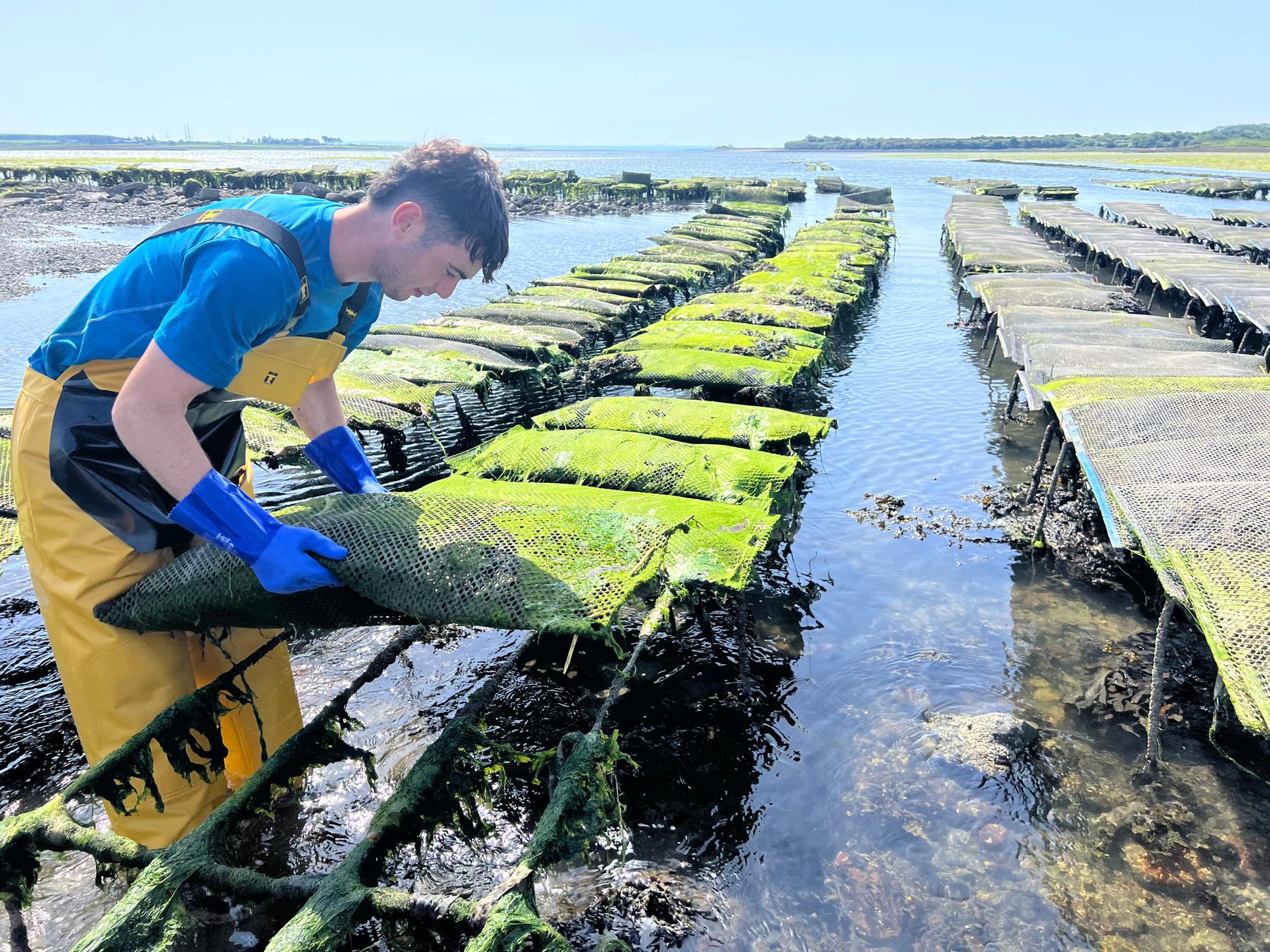
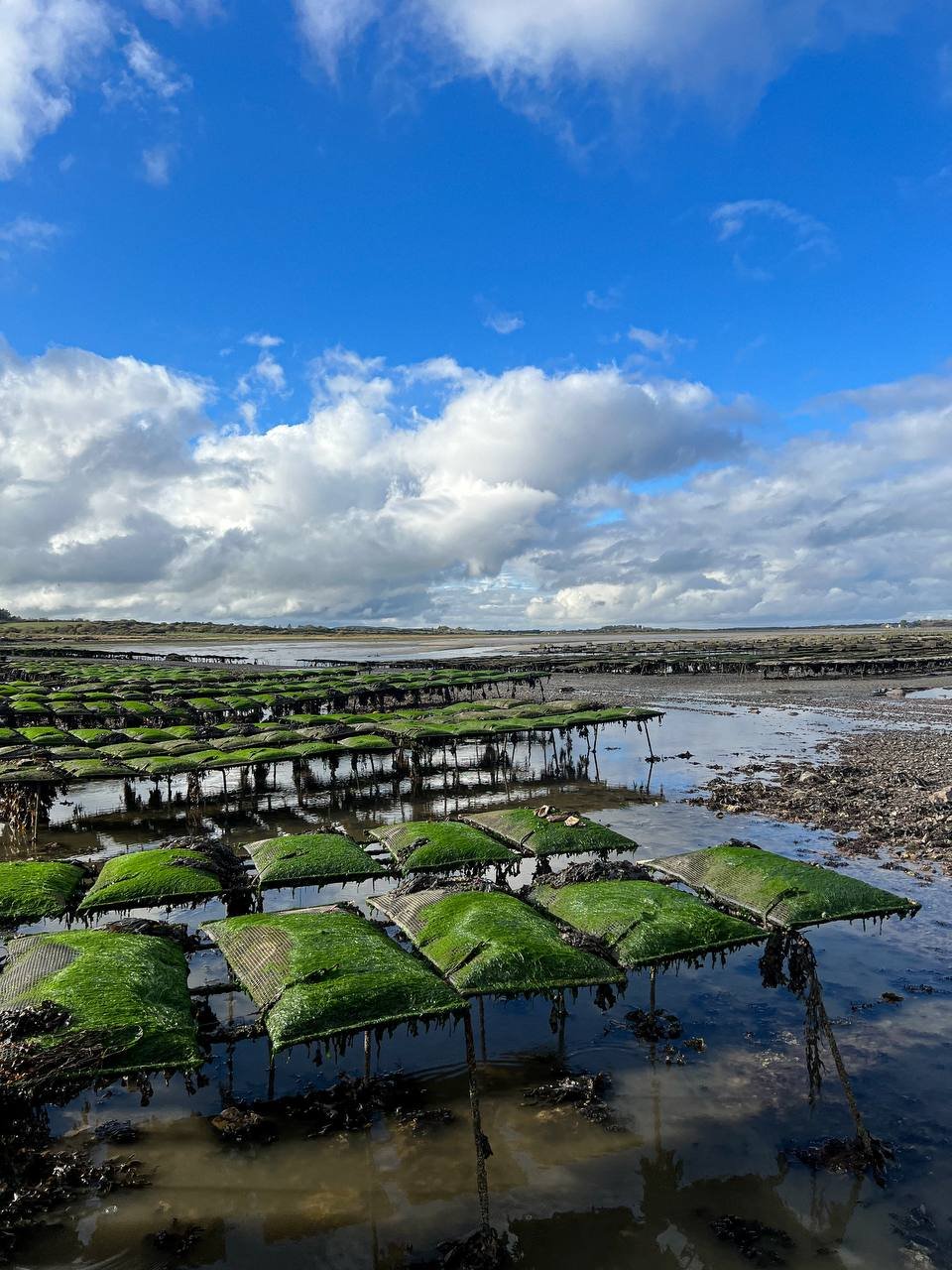
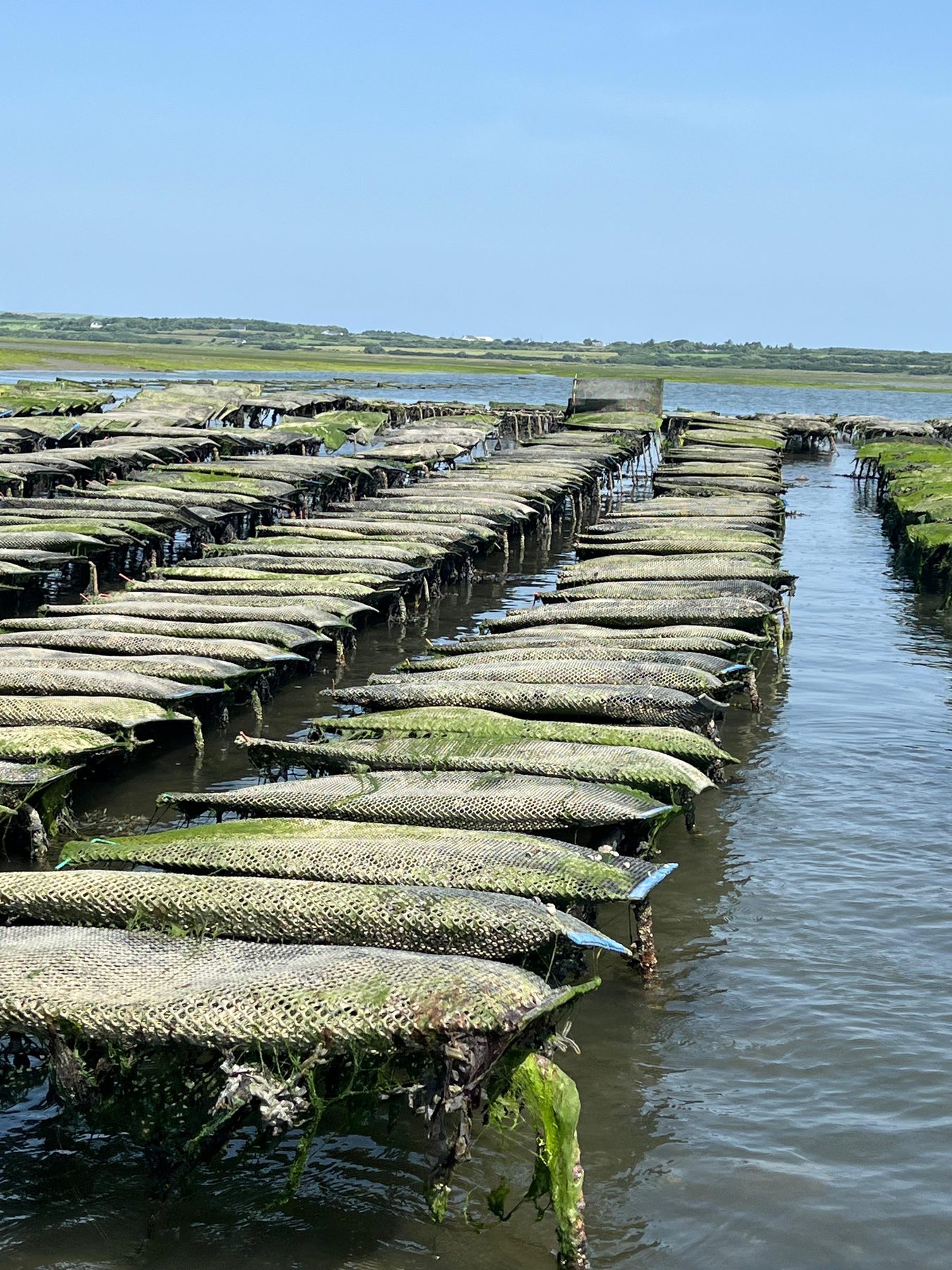
Shannon Oysters grows in Poulnasherry Bay, Co. Clare — trestles, tides, and the daily work of turning and tending the bags.
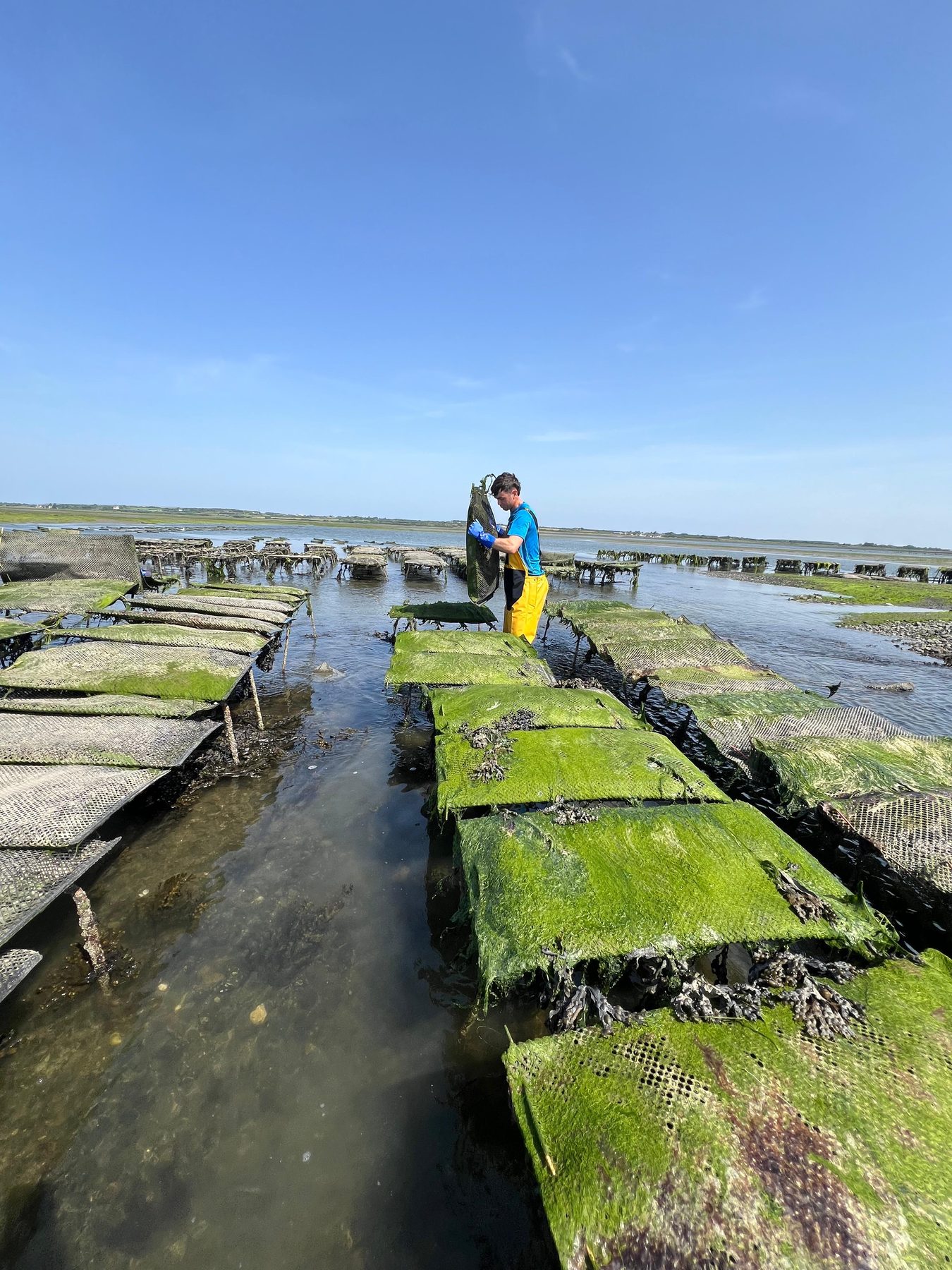
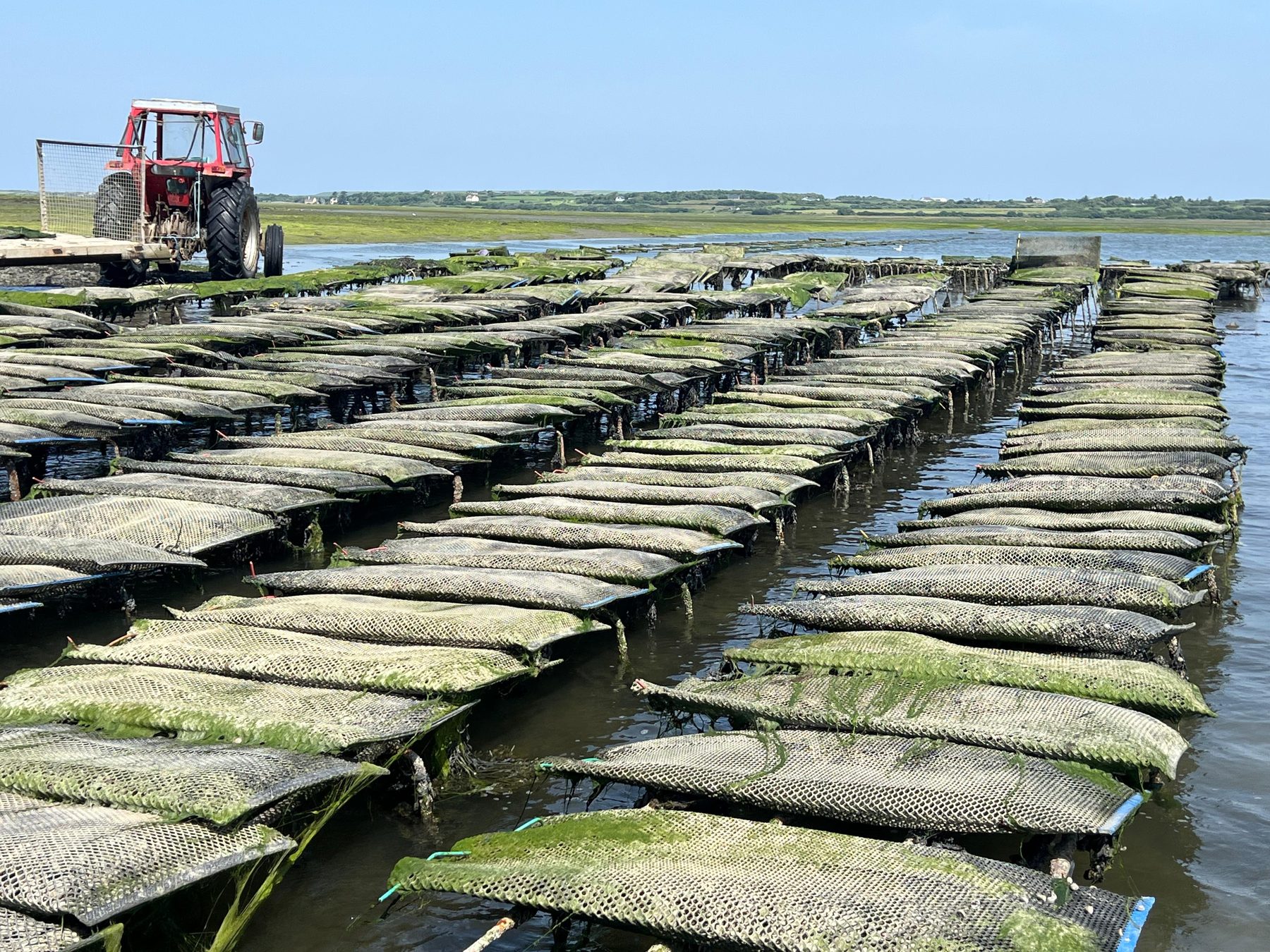
Two old David Brown tractors do the heavy work out here — neither of them spring chickens, but they've never once let us down. No fancy machinery, just two hardy auld tractors that know this bay as well as we do.
Located in Poulnasherry Bay, Co. Clare, on Ireland's west coast, Shannon Oysters benefits from strong tidal exchange and clean Atlantic waters — the authentic conditions behind our oysters' distinctive character.
Oysters on a railway?
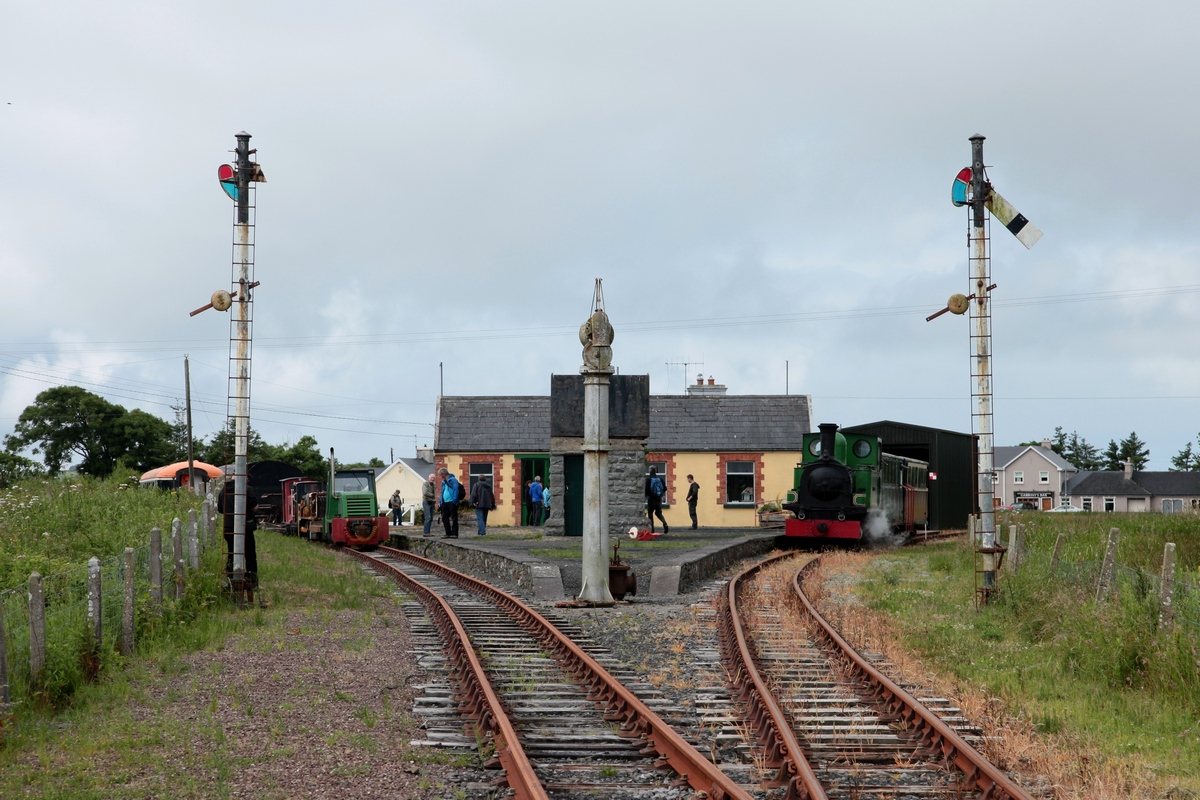
Moyasta Junction in its prime — 2018Just up the road: the West Clare Railway
Moyasta Junction, a few minutes from the bay, was a real stop on the West Clare Railway that eventually got built — the narrow-gauge line running from Ennis out to Kilrush and Kilkee between 1887 and 1961. Just past the junction, the line crossed the "Red Bridge" over the waters of Poulnasherry Bay itself — so for the best part of a century, trains genuinely did run across this bay, tide and all.
The line's timekeeping was notoriously poor — bad enough that the songwriter Percy French wrote "Are Ye Right There, Michael" about it in 1902, after a late train made him miss a performance. A heritage group has run a stretch of it as a working steam railway since 2009, with a small museum at Moyasta Junction, though public services have been paused since 2022 while plans are worked out for the route's future.
For the fuller story, see The West Clare Railway by Patrick Taylor — view on Goodreads →
The Lords Bill that tried to wall off the bay
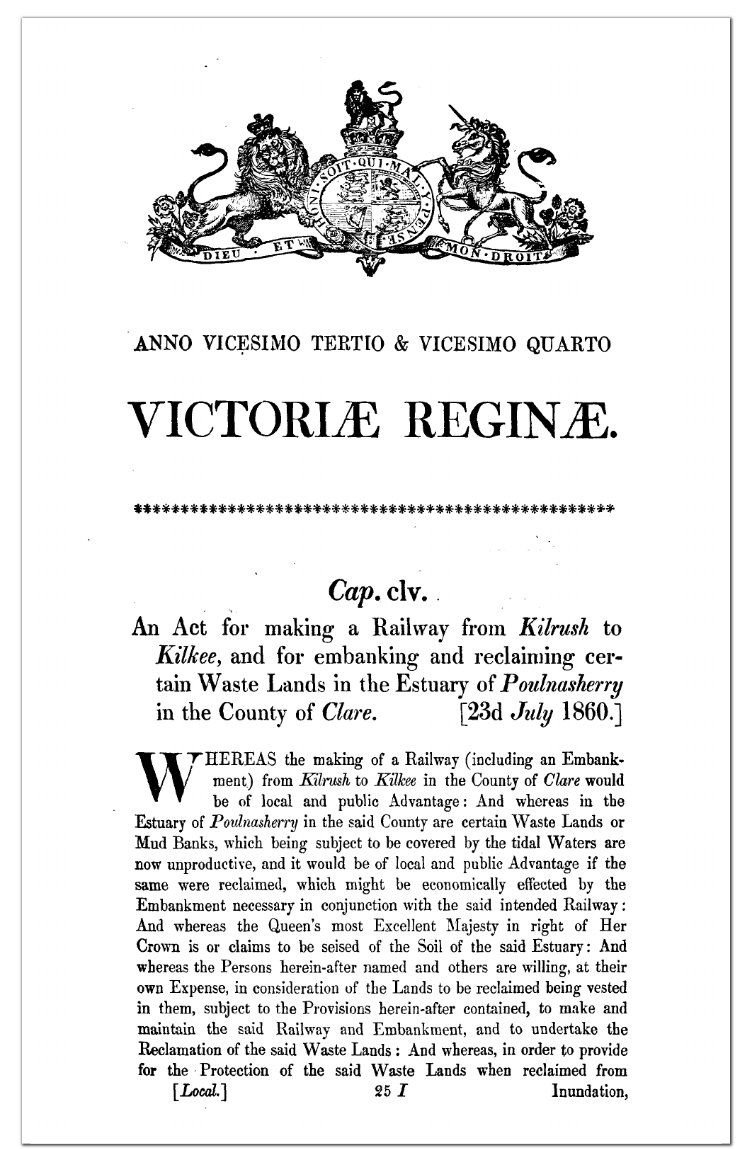
In 1860, Westminster passed the Kilrush and Kilkee Railway and Poulnasherry Reclamation Act — a railway and a land grab for this very bay, bundled into the one piece of legislation. A private company was set up to build the line and, in the same stroke, drain and embank the mud flats here, keeping whatever ground they reclaimed for themselves. An amending Act followed in 1861.
The reclamation side of it came to nothing. An 1863 attempt to wall off the mouth of the bay, from Black Island across to the western shore, didn't survive its first winter of tides. By the time anyone went looking again a century later, only scattered, eroded remains were left, visible at low tide. Whatever Westminster had planned for Poulnasherry, the bay had the final say.
Kilrush and Kilkee Railway and Poulnasherry Reclamation Act 1860 (23 & 24 Vict. c. clv); plan held at The National Archives, Kew, ref. MR 1/89.
Poulnasherry Bay — still the same tide, still the same oysters.